Written by Sheila Monson, a real estate professional with 30 years experience living in Alaska, and helping buyers and sellers navigate remote Alaska property. Sheila moved to Alaska with her husband, two kids, and two dogs. She moved from Montana in a vehicle pulling a 1967 13 foot camper. She and her family lived in that for months until they got employment and eventually bought a house in Wasilla. She and her family moved to Willow in 2015 and still lives there today.
Buying Remote Property in Alaska: Will You Thrive Survive or Die
Moving to Remote Alaska. You will either be motivated by what you will gain, or more importantly, what you have to lose. You can choose the lifestyle of someone living life on their terms, nature, being in position to see and experience the most majestic place on the planet, and in so doing putting aside the lifestyle of phones, cities, alarms, cars, and clothes. I’m talking about the leaving the high life, or what your current view of what entertainment is, and so on – life as you know it. This place. This place called Alaska. It gets in your blood, it sweeps you off your feet. The question is this. Are you willing to sacrifice to experience this amazing place? Are you willing to leave friends and family behind, travel thousands of miles, to live in what I truly believe is the last best place on earth? It is so worth it! But come prepared if you do decide to make the trek to Alaska. This page is to encourage you. And help you be prepared for the obstacles Alaska can throw at you. Please keep reading.
So, you are more than likely here because you want to move to Alaska, have a cabin in the wilderness. start a homestead, have a few chickens, have a vegetable garden live off-grid and be totally independent and self-sufficient, and start a YouTube Channel. Every day I talk to people who are excited about the prospect of buying, moving to, and living the lifestyle in Remote Alaska. During the phone conversation it’s painfully obvious they have no idea what that really means. Reality TV shows about Alaska have put an unrealistic spin on what it really looks like to thrive not just survive on your remote property. My hope here is to provide some real-world scenarios that will help you make an informed decision. A decision that will what day to day life could look like for you when living remotely in Alaska.
The Phone Call: The Revelation That Living Remotely in Alaska May Not Be For You
The phone call. This is just one example of the phone calls I get where the person calling has done very little or no research on what this is going to look like for them. The person is all in on the dream, and completely separated from reality. I totally understand that. It is way easier to talk about the dream, than the high cost of reality. This was the opening dialogue from the person on the other end of the call. She was interested in Remote Land in Alaska for Sale.
"Hello,
We are from Texas and are interested in remote land.
We would be selling our property here if we find something that we can envision a homestead and a way for my husband to earn a living nearby.
We would love to hear if you have anything that may fit that idea."
Now I always try to help people if I can. Having no idea what this person was looking for, I started to ask what I would think are common sense questions. Like, what area in Alaska ( Alaska is a big state, 586,000 square miles), and how much you want to spend? Do you want off-grid, no road access, road access but off-grid, 1 acre, 10 acres? What does your husband do and how close to a town will he need to be to work? Will you be paying cash or getting a loan? If it's off grid, you will have to pay cash as no bank will finance the property. Have you been preapproved for a loan if you are getting one? Will you be using money from the sale of your property there? I can't do any showings for you, most sellers won't allow it, until you provide proof of funds whether cash or 90% letter from a bank. And the same goes for remote property with no road access. You will only be able to get financing if you are on the road system and sometimes, depending on the property not even then. There are so many factors to consider here. Also, anything available now will more than likely be gone by the time you get around to moving. I highly recommend that you spend some time on our website. Look at the properties we have listed and sold. Look at the different areas, what town you might want to live in etc. Also, dig deep into the "Guides" section. This will also help you get more education on what it will look like to buy something remote in Alaska. How much did she want to spend? $25k This was what she wanted to spend for a piece of property with a livable cabin on it. Now at the end of this conversation this person was blown away! Almost speechless when she found out about what the true process looked like and what the actual costs would be. What really are the costs? We will get more into that below.
The True Costs of Living Remotely in Alaska, What it Could Mean For You
Before we get into the costs, let’s talk about what it looks like to schedule and see a property. To elaborate a little on sellers. The days of someone scheduling a showing on a remote property are over for people that can’t show proof of funds at least here in Alaska. Most sellers will not let you onto the property until you show proof of funds. In their mind, and rightfully so, they feel like if you don't have the money, you shouldn't be looking at the property. It also reduces the threat of people checking the place out and potentially coming back and vandalizing it or robbing it, or even worse, squatting on it. Up until the last 5 years there have been people that pretend to be a buyer and say they are interested in a remote property, they never had to show proof of funds, and then get the seller to pay for a "free flight seeing tour" to go out and see it, all the while the “buyer” had no intention of buying it. For the seller it makes perfect sense, if you don’t have the funds, you are not a serious buyer and they won't allow you to see the property. One more footnote on this subject. If you want to schedule a showing to see a true remote property, and by that I mean one with no road access. Once proof of funds has been established, You will be paying all the costs to go and see it. If it is a million dollar property on a remote lake, you will be paying for the cost of chartering a bush plane to not only get yourself out there, you will be paying the cost for either me or my husband to go out there with you. The sellers will not take on the costs of getting you to and from the property. Same if it is a 1 acre lot in the interior $15k with no road access. You will be figuring out on your own how you are going to go look at it. This is just one more indication to a seller just how serious you are, when considering buying a remote property. That is the new world in which we live.
One thing to keep in mind is that Alaska is not going through the housing crisis that the lower 48 is. Prices are staying high. $25k on the road system will get you almost nothing. You might find something, but it will be swamp, something with a very steep slope, or in a flood zone. Here is a cabin that needed a lot of repairs. It was not on the road system, but you could access it by snowmachine or ATV. It was a dry cabin meaning it had no running water. Which means no bathroom, you used an outhouse, summer and winter. It was sold for $125k. On the road system it would have easily sold for $200k
Remote Cabin in Alaska on 8 Acres
Here is a listing we have. 2 Acres with road/trail access. $79k and it went pending in less than two weeks.
2 Acres with Road/Trail Access
Vacant land that is buildable, meaning you can build a cabin or home on it, with no improvements, with road access, can run you 20-$50k for 1 acre. Remote property with no road access will be cheaper, but you can't get to it, so you will need a plane, snowmachines, an ATV or all the above driving costs through the roof. Lakefront on the road system can run $120-$200k for a one acre depending on the lake.
Expenses. The cost of living in Alaska is VERY expensive. You will need a suitcase full of cash. If you choose to rent while you are getting established and are looking for jobs, rent on a 3-bed 2-bath house can be as high as $3500.00 a month. A dry cabin if you can find one 1200-$1500.00 a month. The cost of fuel, groceries, utilities and just everything is crazy high. This is before I even get to the astronomical expense of construction materials and the cost of getting them to a remote property.
This is a great resource. Lots more information about the Hidden Costs of Owning Remote Property in Alaska
Winter in Alaska, Do you have what it takes to Survive
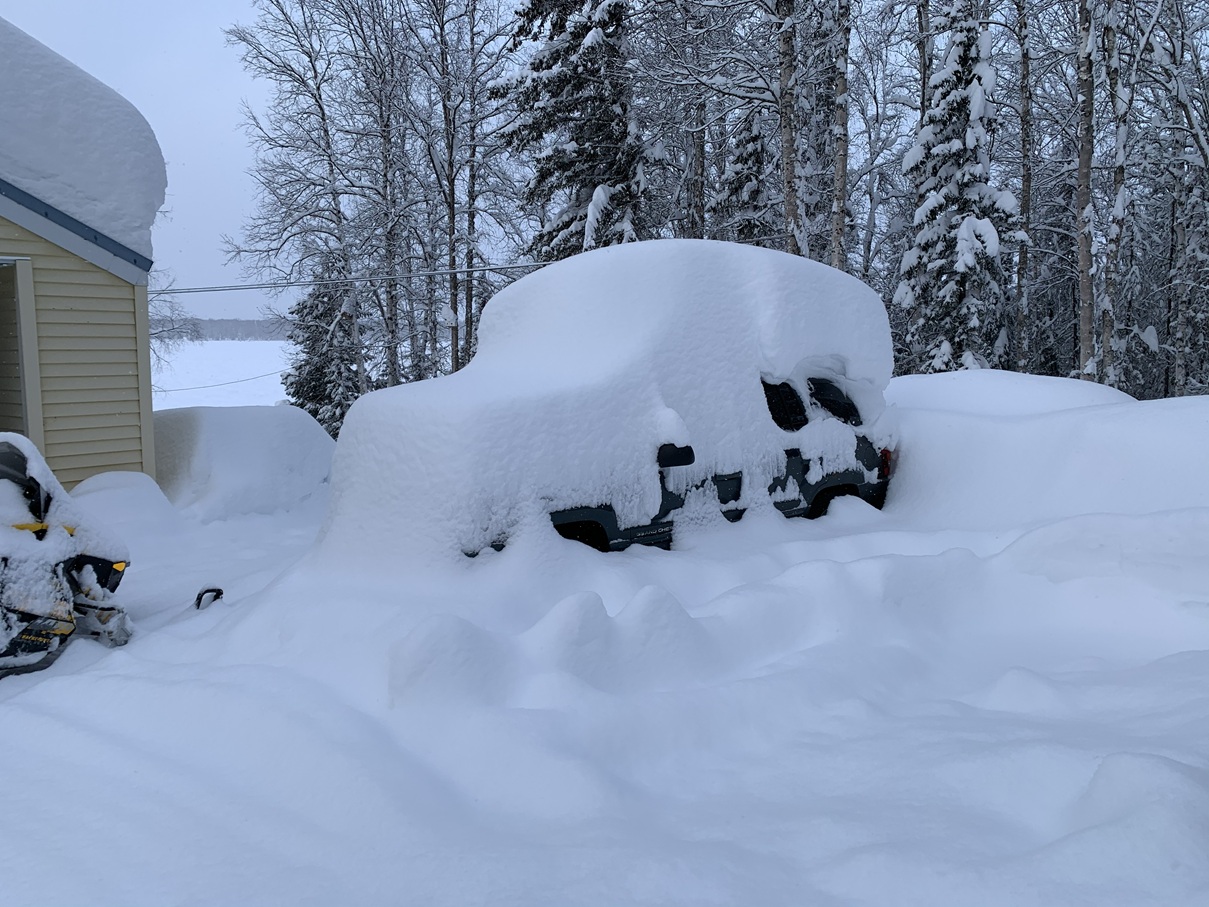
No subject can catch a buyer off guard more than the severity of the long, what can seem like never ending, dark winters in Alaska. Will you be able to survive when it is -50 for two months and dark all the time? Snow removal. We live in Willow, we can get upwards of 6 feet of snow on the level. A lot of money is spent on snow removal. We pay someone, but if you do it yourselves you will need a substantial reliable plow truck and on a normal winter you can expect to be plowing upwards of anywhere from several times a week, to once or twice a month depending on the severity of the winter that year. This does not take into account shoveling where the plow can't reach. Walkways out to the chickens, the dog house, the shop, the outhouse etc. The picture at the top of this page? That was our house in March. On an average winter we can pay anywhere between $1500-$2000 to keep our driveway open. And my husband still spends hours shoveling where the snow plow can't reach. March is when everyone in the lower 48 is thinking about spring, planting gardens, getting outside, enjoying the warm sunshine and various other outdoor activities. Here in Willow where I live, in March, there is still a lot of winter left. We could have snow still left on the ground through the middle of May. The ice on our lake finally goes on on the 14th or 15th of May every year. As I type this I am looking out my window. It is May 4th 2026, it is 33 degrees, raining, and there is still substantial amount of snow visible on the ground. There is much more I could say about the winters in Alaska. But here is more of the reality of living remotely in Alaska.
Winter in Alaska is not just cold — it’s extreme. And if you aren't prepared, it is the single most important thing that you need to be prepared for. Because it is also thing thing that will determine if you really have what it takes to thrive on a remote property in Alaska.
Learn More about How to Prepare for Winter in Alaska
Depending on the region, you may experience:
- extended darkness
- prolonged subzero temperatures
- limited access for weeks or months
- heavy snow accumulation
Temperatures can drop to levels that affect:
- equipment
- fuel systems
- daily routines
This is not a seasonal inconvenience — it’s a defining part of life. And it will define you quickly! The picture below represents the snowfall we received on a 3 day weekend in March in 2020.
Access Doesn’t Just Mean Getting There — It Means Getting Back
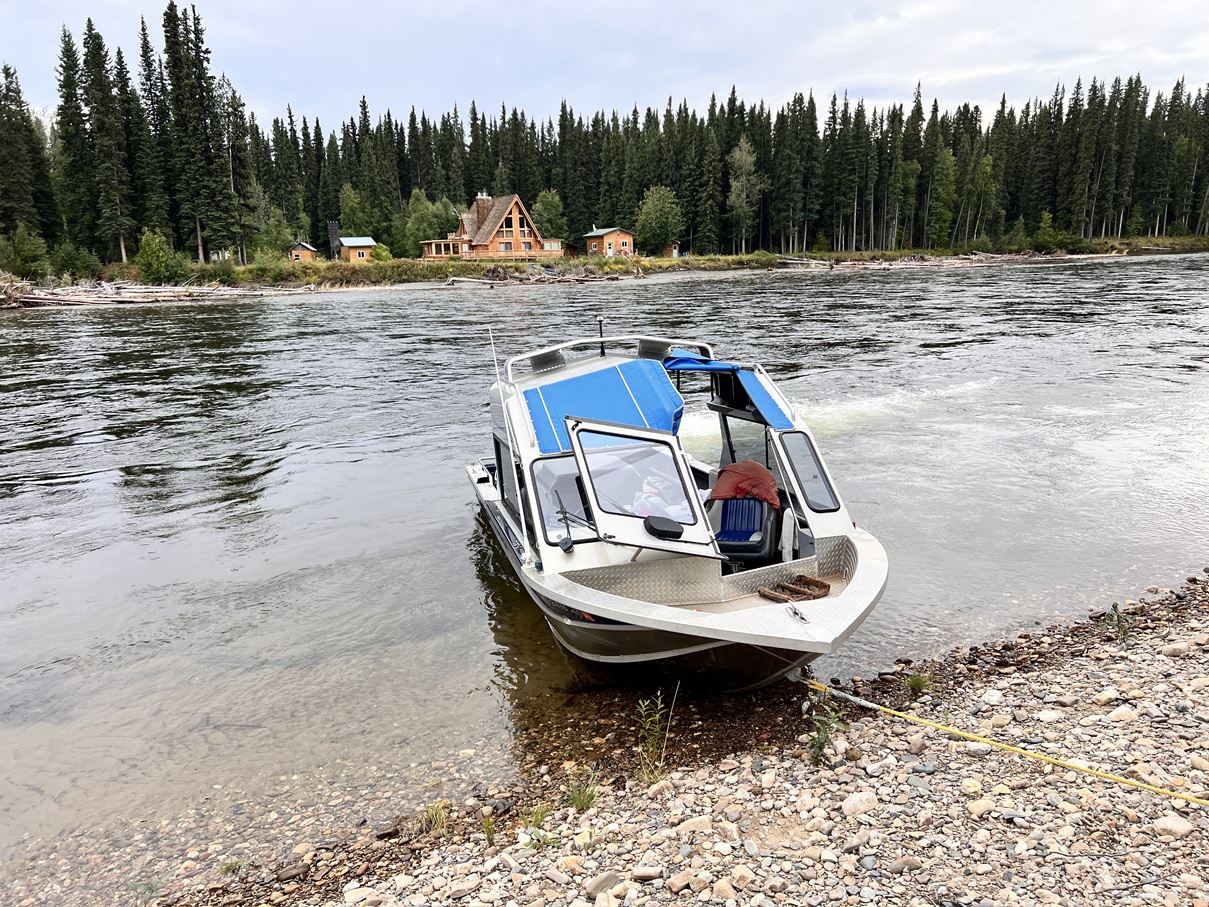
Access. Next to the winters here in Alaska, there is perhaps nothing that is overlooked more than how you will access your remote property. This is where the costs of owning a remote property, living off-grid, and living the Alaskan dream can go through the stratosphere. And it is also the most important thing that most buyers pay zero attention to when thinking about living remotely. So, ask yourself. How will I access my remote property? Where will I park to unload all of my gear, leave my vehicle and trailer for days maybe weeks, and then try to get to my property? You can't park just anywhere. Let me give you a real-world scenario. The Yentna River around the Skwentna area is a very popular area for people that buy land and want to live remotely. Why? You can access most of it by using the river for your road. So, let’s put this together piece by piece so you can see how this will work for you. So, you buy a remote property on or close to the Yentna river. You will need a boat. Not just any boat. A Jet boat. What is a Jet boat? Well first off, they are expensive. This is a boat that has a motor on it that will allow you to go through incredibly shallow water. Why is this important? Because the river changes. One minute you can be cruising along in what might seem deep water, and the next minute you are stranded on a sandbar because your prop motor bottomed out. Not only are you stranded, but now you have a huge repair bill for your boat, and that’s once you get it towed back to your launch point. That leads me to the next question. Where will you launch your boat from? You won’t be able to launch from just anywhere. There are a few places you can launch a boat from and those require a yearly fee, or a pass of some sort to park. Everywhere else is on private land and you can’t launch your boat there. More costs. So, you have your boat, you have paid your annual pass to launch it, you are cruising down the river, and you get to where the trail is to access your property. Even if you are directly on the river, you will still need an ATV to access the land around you to hunt, fish, etc. But if you are not right on the river you will need to get to your property, which can be several miles. You will need a form of transportation, usually in the form of a side-by-side ATV, which as we all know can be very expensive. I have come up with an interesting solution for people who want to buy a remote property in this area. Some people just don’t want to pay for the annual pass to park their boat. Last time I checked it could be as high as $3k a year. Instead, I just look for an acre of land for sale, close to the boat launch. They buy it, and stage everything from there. Park their boat, ATV’s (Boat is large enough to accommodate those down the river) and just use this property for storage of their equipment. Again, this of course adds to the staggering costs. Learn more about how to access your riverfront property in Alaska. We haven’t even touched on the infrastructure for your property such as Solar, generators, batteries, and potential wind power. We will get to that next.
But here are the bullet points for access to your remote property. Many buyers focus on how they will reach their property, but don’t fully consider:
- what happens when conditions change
- how reliable access is during winter
- what it takes to transport supplies
Access may involve:
- snowmachines
- planes
- boats
- seasonal routes
👉 Learn more about how access works.
The True Cost of Living Remotely in Alaska
So here is just a little bit of the breakdown for the costs of living remotely in Alaska. Groceries can cost 30-40% higher and sometimes double than city prices because of the massive cost of groceries flown in by plane or boat to that particular rural area.
Logistics and Transportation
Remote buyers rely on airplanes or boats adding to the massive cost of just about everything.
Heating and Utilities
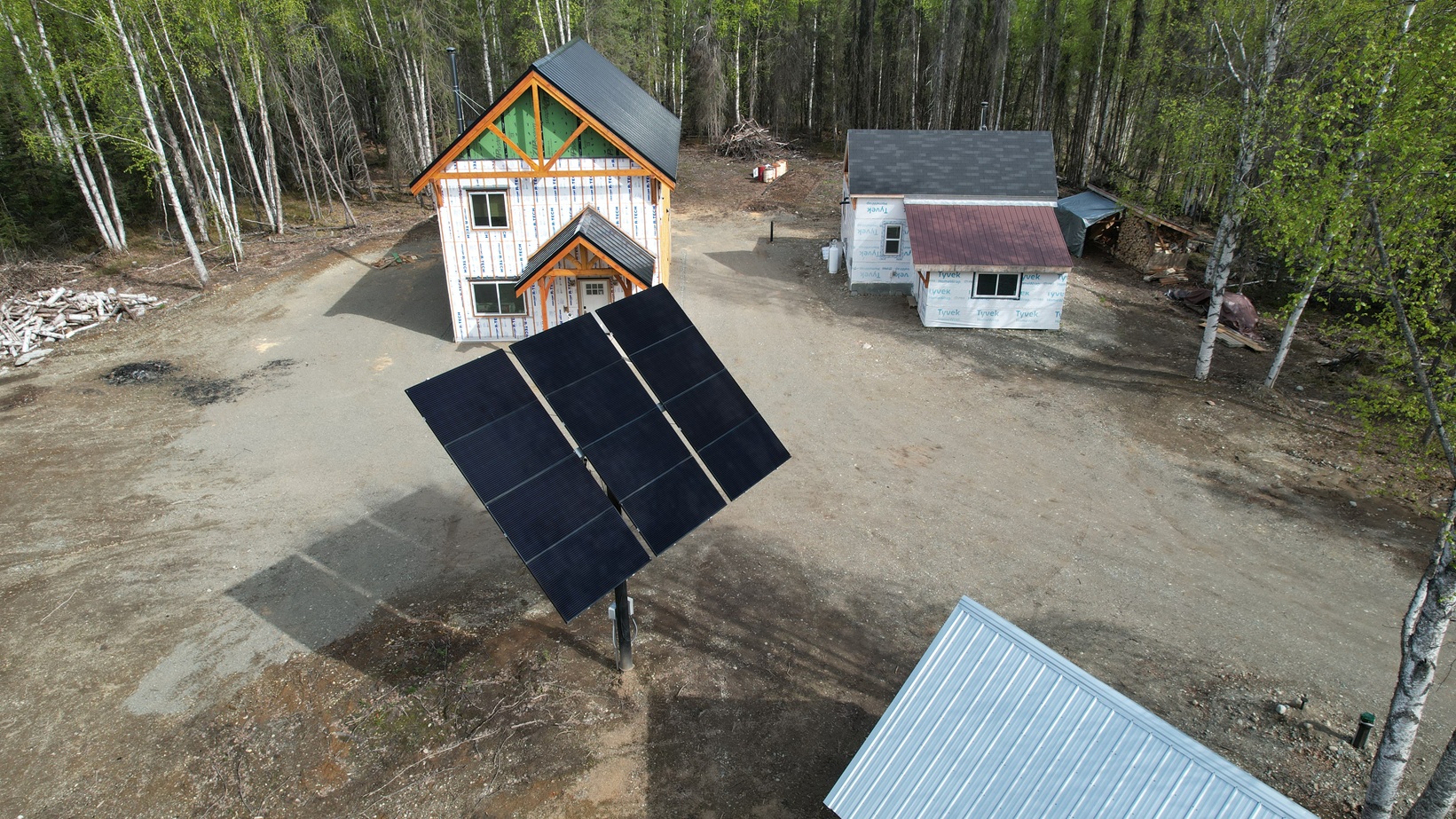
Living remotely and off-grid you require you to install one if not all of these systems. Solar power, generators, wind power, or all of those. Maintenance on these systems can be very expensive. Heating costs are a major expense due to extreme winters, and electricity, if available, can be very high. A wood stove is a must. Cutting and splitting 6-8 cords of firewood, what I see as a minimum for a long Alaska winter, is arduous backbreaking work. But it can help offset the costs of heating.
Overall cost of Food and Supplies
If you live remotely in a non road access village or town, groceries are much more expensive than in Anchorage. A gallon of milk can cost you $10 a gallon or more.
Materials and Maintenance
Any kind of construction materials, and the transportation needed to get them to a remote property can be astronomically expensive. The extreme weather in Alaska quickly reveals the need for continuous ongoing repairs.
Can you budget for the remote life
If you don't have some kind of consistent income you will need to budget wisely. Due to the possible emergency repair cost, or health costs, you should plan a 6 month budget plan over a month to month.
A Subsistence Lifestyle can Offset Some of Your Costs
Hunting, fishing, and gardening, can offset your costs. But those require enormous amounts of times, skill, and equipment.
Income Restrictions
Although Alaska doesn't have an income tax, and some parts of the state don't have property taxes, remote work is difficult and it almost always requires money out of your savings, or a part time, or full time job away from your property.
Can you Die at or on your way to your remote property
Yes you can! And people have. There are many cases of people people dying trying to access, or live at their remote property. Usually by freezing to death or by a out of control fire that got started in their cabin. This is an article about a couple in 2024 who lived in Circle, 150 miles on the Steese Highway deep in the interior. They got stuck in deep snow, 10 foot drifts, and a severe 60 mph wind storm. Survival gear is a MUST in vehicles, snowmachines, and ATV's. Subzero sleeping bags, food and water. Read more about this tragedy here.
This man actually survived in the wilderness for 3 weeks after he burned his cabin down while trying to start a fire in his woodstove. Again, this person was woefully unprepared for this disaster. Read more about this story here.
Gary Muehlberger, that name might ring a bell. He was a star in the National Geographic Reality Show, Life Below Zero. He died when his cabin caught on fire. Read more about that story here.
Medical Emergency Access
If you suddenly in bad health, or in generally bad health, an air ambulance service will cost you a fortune if you need emergency medical care.
The Cost of Improving Your Property
Whatever you do to improve your remote property will almost always include the costs of heavy machinery. The cost of an excavator or bulldozer will be very expensive. And then there is the cost of getting it to your property.
You will Need to Develop Off-Grid Skills
You will need to learn many off-grid skills. Like operating your own equipment. Running a chain saw, understanding your generator, your solar system, and all of the other things required to survive, and knowing how to repair them.
The purchase price is often the smallest part of the equation. Learn more about understanding off grid infrastructure before you buy.
Real costs include:
- heating fuel
- transportation
- equipment maintenance
- off-grid systems
- time and logistics
👉 Learn more about the hidden costs of owning remote property in Alaska.
Off-Grid Living Requires Constant Attention
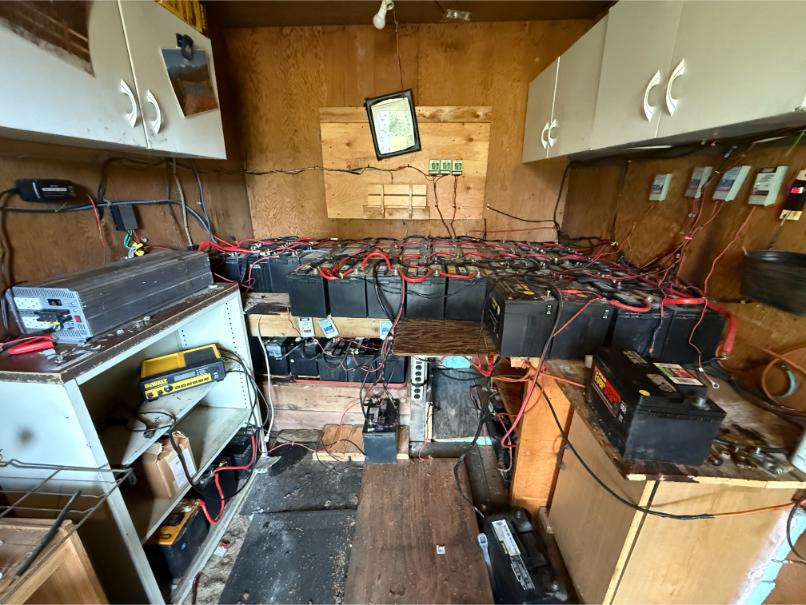
Living remotely often means managing your own:
- power systems
- water supply
- waste systems
These systems don’t run themselves — and failures can have serious consequences depending on the season.
This Lifestyle Isn’t for Everyone — And That’s OK
There is nothing wrong with realizing that remote property in Alaska may not match your expectations.
In fact, understanding that early is one of the best outcomes possible.
My goal isn’t to discourage you — it’s to make sure you’re making a decision based on reality, not just the idea of it.
Just one Remote Alaska reality. Winter last 8-9 months. And the second it's over you are already preparing for the next winter. Firewood, cabin and machinery maintenance; the list goes on and on. And just like that, it is snowing again.
I am giving valuable information that the Alaska Reality TV shows won't. Nothing about those shows resembles reality. What I am telling you is real life reality. When and if you come. Have enough money saved up that you can live for no less than 6 months without income; a year would be better until you get employment. Better yet, get employment before you get here. Why do I tell you this? I have seen many families give Alaska their best tries, only to be defeated, left penniless and homeless, and move out of the state in one year.
If You’re Still Interested — You’re Probably a Good Fit
If you’ve read this and still feel excited about owning remote property in Alaska, that’s a strong sign.
It means you’re approaching this with a realistic mindset. And that’s exactly what leads to a successful Remote Property experience.
Sheila Monson
